
C-TRACT Trial: Endovascular Therapy Lowers PTS Severity, Improves QOL
06/22/2026
Key Takeaways
- Six-month post-thrombotic syndrome severity was lower with endovascular therapy plus standard care than with standard care alone.
- Patient-reported quality of life was better with the endovascular strategy on both VEINES-QOL and SF-36.
- Bleeding was more common, mostly nonmajor, while symptomatic recurrent venous thromboembolism and death were similar and longer-term durability remained unresolved.
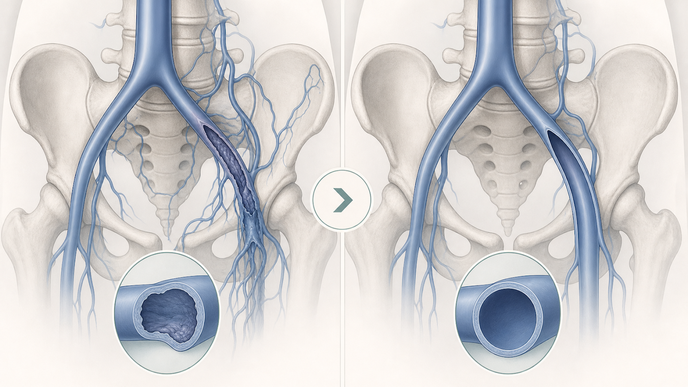
C-TRACT was an open-label, assessor-blinded randomized trial conducted at 29 U.S. centers, where 225 patients were assigned to endovascular therapy plus standard care or standard care alone. Allocation was 113 to endovascular therapy plus standard care and 112 to standard care alone. The studied population had moderate or severe post-thrombotic syndrome with iliac vein obstruction; mean age was 55 years and 47% were women. The endovascular strategy paired iliac-vein stent placement and enhanced antithrombotic therapy, while standard care included compression therapy, anticoagulants, patient education, and wound and ulcer care. Baseline VCSS averaged 12.4/30 and baseline VEINES-QOL 39.3/100; because of crossover and additional withdrawals, 102 patients received endovascular therapy, with successful stent deployment in 98, before the six-month assessment.
During follow-up, antiplatelet use was more common in the endovascular group than in the standard-care group, at 71.3% versus 21.0%. At six months, VEINES-QOL was 62.8 versus 48.6, with an adjusted difference of 14.5 points (p<0.001). SF-36 scores were 56.0 versus 49.9/100, with an adjusted difference of 6.1 points (p<0.001). Both measures moved in the same direction across disease-specific and general health instruments. Investigators described the mean VCSS separation as modest and noted movement into lower severity categories over six months, suggesting the clearest gains were in symptoms and patient-reported health status.
Bleeding was more common with endovascular therapy, occurring in 11.6% versus 3.6% of patients (p=0.03) and driven mostly by nonmajor bleeding at 9.8% versus 2.7%. Symptomatic recurrent venous thromboembolism and death were similar between groups over the same six-month period.