
Transcript
Announcer:
You’re listening to GLC on ReachMD. This activity, titled ‘No Patient With CKD Left Behind: New Horizons in Patients With CKD Regardless of Diabetes Status’ is provided by Global Learning Collaborative.
Prior to beginning the activity, please be sure to review the faculty and commercial support disclosure statements, as well as the learning objectives.
Dr. Tuttle:
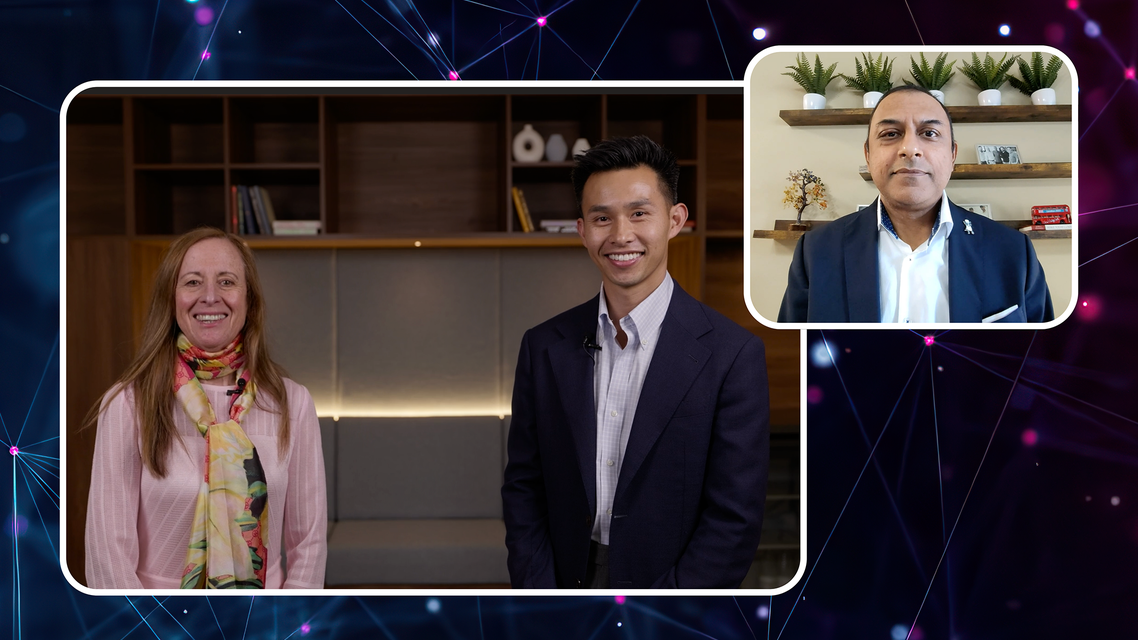
Welcome to Continuing Education with GLC. I'm Dr. Katherine Tuttle, a nephrologist from the state of Washington in the United States, where I'm professor of medicine at the University of Washington and executive director for research at Providence Inland Northwest Health. And joining me today is Dr. Brendon Neuen.
Dr. Neuen:
Hi, Dr. Tuttle. My name is Brendon Neuen. I'm a nephrologist and clinician researcher from Sydney, Australia. I'm an associate professor of medicine at the George Institute for Global Health at the University of New South Wales, and a practicing nephrologist at Royal North Shore Hospital, also in Sydney.
Dr. Tuttle:
Well, thank you, Brendon.
CKD doesn't care whether your patient has diabetes, and increasingly neither do the latest data. Today, we're exploring how emerging evidence with nonsteroidal mineralocorticoid receptor antagonism, or MRA, is shaping cardiovascular, kidney, and metabolic care, and why it's time to make sure that no patient with CKD gets left behind.
Okay, let's dive right in, Dr. Neuen. How are the latest data from FIND-CKD and INFINITY expanding the understanding of residual risks and available treatment options for all patients with CKD?
Dr. Neuen:
Well, Dr. Tuttle, here at ERA in Glasgow, we heard the results of the FIND-CKD trial, as well as the individual participant data meta-analysis of the 3 finerenone trials called INFINITY.
As you know, FIND-CKD was a randomized double-blind placebo-controlled trial conducted in 24 countries around the world. It enrolled 1,584 patients with nondiabetic kidney disease and an eGFR greater than 25 and at least 200 mg/g of albuminuria.
And what the trial demonstrated was that finerenone, compared to placebo, attenuated the annualized decline in GFR from 4 mL/min/year in the placebo arm to 3.3 mL/min/year in the finerenone arm, and this was highly statistically significant.
In addition, finerenone reduced the risk of the key secondary composite endpoint of kidney failure, 57% decline in GFR, heart failure hospitalization or cardiovascular death by 23%. And although hyperkalemia occurred more frequently with finerenone compared to placebo, serious and clinically relevant hyperkalemia events, such as those leading to permanent discontinuation or hospitalization, were very uncommon overall.
And in addition to the FIND-CKD data, as you know, we have data from diabetic kidney disease trials, FIDELIO and FIGARO. And in the individual participant data meta-analysis of all 3 trials, enrolling 14,500 patients, finerenone was shown to reduce the risk of CKD progression by 24% overall, reduce the risk of heart failure hospitalization or cardiovascular death by 20%, reduce the risk of cardiovascular death by 18%, and reduce the risk of all-cause mortality by 12%.
So these data are compelling, and they suggest that finerenone, a nonsteroidal MRA, should play a foundational role in the treatment of kidney disease irrespective of kidney disease etiology, level of GFR, albuminuria, and other characteristics. I think these data are so important for clinical care and for our patients with CKD.
Having seen the data and knowing it very well, Dr. Tuttle, what's your interpretation of the results of both FIND-CKD and INFINITY?
Dr. Tuttle:
Well, I mean, this is another big win for the CKD community, and it really expands the option of using finerenone to reduce that residual risk. So despite the fact that we already have so-called pillared therapy, at least with ACE inhibitors or ARBs plus an SGLT2, even in the non-diabetes CKD realm, we still have residual risk that accrues over time. And what we've been able to show in FIND-CKD and INFINITY is that that risk is meaningfully reduced for a large spectrum of patients, and this has been an unmet need.
For most people with CKD, we really enrolled the most common forms of CKD in the world, a large population with glomerular disease—and you've led the analyses on that—where they benefited similarly to other patients. Same for people with hypertension-related CKD, another common cause, and even scattered rarer causes. So this really is another transformative therapy that's going to give us options that really do save kidney function and at the same time reduce their major, if you will, competing risks or concurrent complications, such as cardiovascular disease, particularly heart failure. And this rolls up to improve survival from cardiovascular causes and even all-cause death.
And so I think this is another major milestone in the treatment of CKD, and it's an exciting time to now have yet another highly, I'm going to say, effective option, because if we get it right, it will not only be efficacious and safe, we will apply the therapies in an effective way so people can benefit.
Dr. Neuen:
Dr. Tuttle, you've spent your professional life managing metabolic complications, kidney disease, reducing cardiovascular risk. How important do you think this is that we have an agent, a nonsteroidal MRA, that not only reduces kidney risk but cardiovascular disease risk in both populations?
Dr. Tuttle:
It's enormously important because, basically, in people with CKD, especially with diabetes, but also in people without diabetes, they are more likely to die than develop kidney failure. And if we can reduce the risk of death and among the survivors preserve heart and kidney function, this is an enormous breakthrough, I would say, even at the public health level, because people can stay alive and stay functional.
And I think the data are really important, and we need to be rigorous about them, but we also need to understand the bigger picture and what this can really mean for patients' lives, staying alive and staying functional.
Dr. Neuen:
Absolutely. And next week I'm going to be back in Sydney, you're going to be back in Washington, what do you think this means for us and our colleagues as practicing nephrologists every day? How can we implement these data, and what does it mean?
Dr. Tuttle:
Well, I think the first piece is education, like we're doing today, is getting the word out. I think the other big issues that are worldwide issues is increasing access to therapies and making them available in a way that is not burdensome to patients, understanding that, again, if they're going to stay alive and stay functional, this shouldn't be terribly difficult, and these should be affordable therapies.
For those just tuning in, I'm Dr. Katherine Tuttle, and here with me today is Dr. Brendon Neuen. We're discussing emerging evidence with nonsteroidal mineralocorticoid receptor antagonism for the treatment of CKD. Welcome in.
We've talked about the evolving science, but for many patients with CKD, especially people without diabetes, the journey to diagnosis and treatment is still often uncertain, isolating. And so let's hear from a patient.
Pesh Patel:
Thank you. My name is Pesh Patel, and I unfortunately crashed into dialysis in 2017 when I was on a business trip in Australia.
Now, at that point, like many people diagnosed with kidney disease, I had no idea what kidney disease was. I didn't even know what the kidneys did. So the lack of education from the general population and for those of us that are diagnosed with kidney disease is unfortunately too common a thing.
Combine that with feeling overwhelmed and not knowing what to do or how to do it with kidney disease, and especially myself and patients like me, especially a lot of patients I speak to that have non-diabetic kidney disease, often feel overlooked. The lack of treatment options, as we feel, and also the fear of progression. A lot of patients feel like access to care, and access doesn't only mean where we have to travel far to find a specialist, a nephrologist. It's also waiting 3 to 4 to 5 to 6 months for an appointment in some cases. In that time period, the disease state can increase rapidly, especially when you don't have the educational tools or the resources to treat kidney disease the way it should be handled, so it's a big fear.
So we are fighting this disease on many fronts, and of course, the overarching mental health aspect that goes along with kidney disease sometimes isn't addressed either. So as kidney disease patients, we feel, and I feel every day, it's a battle, and we just want more. We want more research, we want more innovation, and we want more access to therapies to slow progression and for non-diabetic kidney disease.
So we're hoping for future advancements, and we want to make sure that there's no patient with CKD left behind.
Dr. Tuttle:
Well, it is really exciting to report that we finally have solutions for patients like Pesh. So now we need to talk about moving forward to really ensure that no patient with CKD who could benefit from these therapies is left behind.
What do you see? What are the common themes you see in your patients in Australia? And how do these emerging data impact their quality of life?
Dr. Neuen:
Well, I think, Dr. Tuttle, Pesh's story raises a number of important points that are pertinent across many areas, whether it be Australia, the United States, Europe, or here in the United Kingdom. His story highlights that kidney disease is often diagnosed too late. We need to do much better at identifying kidney disease earlier, improving screening with albuminuria to identify patients so that we can treat them earlier.
Now, that may have been less urgent in the past, but as you've mentioned, with multiple highly effective therapies, we now have an opportunity to improve quality of life, survival, and reduce the global burden of kidney disease from a public health perspective, but also for individuals, and at a tremendous societal cost that none of our colleagues need any reminding about.
And so I think that his story highlights, on one hand, how important and urgent our task is but also, on the other hand, how much of an opportunity we have now to improve the lives of our patients, their families, their caregivers, the societies in which we live in. And reducing kidney disease and the burden of kidney failure has a tremendous impact on the society, economic productivity, quality of life, and we now have the tools to do that.
And so I think the task for all of us and our challenge is to implement these therapies and also to improve access, because it's well and good to talk about new therapies, but if patients who need them can't access them, then they're really not benefiting anyone.
So I think we have many things to work on as a community, but also tremendous opportunity.
Dr. Tuttle:
I totally agree with you, and I guess I'll say it's a good problem to have. Now we have therapies. For decades kidney disease was largely viewed as untreatable, so the field focused more on kidney failure. This is a real paradigm shift and a culture change that we're going to need to impart throughout our communities. And it is our job to increase CKD awareness, detection, and be the champions of interventions that truly do save kidneys, hearts, and lives, for all the reasons that you've mentioned.
Well, I think this has been a fantastic conversation. What would be your one take-home message. If you wanted people to remember one thing at the end of this conversation, what would it be?
Dr. Neuen:
We now have really clear data that the nonsteroidal MRA finerenone reduces kidney disease progression, cardiovascular risk, and mortality in patients with chronic kidney disease. And it's a foundational therapy that we can use now to improve the lives of our patients, and the job, as you've mentioned, Dr. Tuttle, is now implementation.
Dr. Tuttle:
Fantastic. So maybe we'll leave you with the mantra: save kidneys, hearts, and lives.
So that's all the time we have today. I want to thank you all for listening, especially you, Dr. Neuen, for joining me and sharing all your valuable insights and experience. It was really wonderful speaking with you today.
Dr. Neuen:
Thanks very much.
Announcer:
You have been listening to GLC on ReachMD. This activity is provided by Global Learning Collaborative.
To receive your free CE credit or to download this activity, visit ReachMD.com/CME. Thank you for listening.
 EBAC
EBAC