
Transcript
Dr. Tuttle:
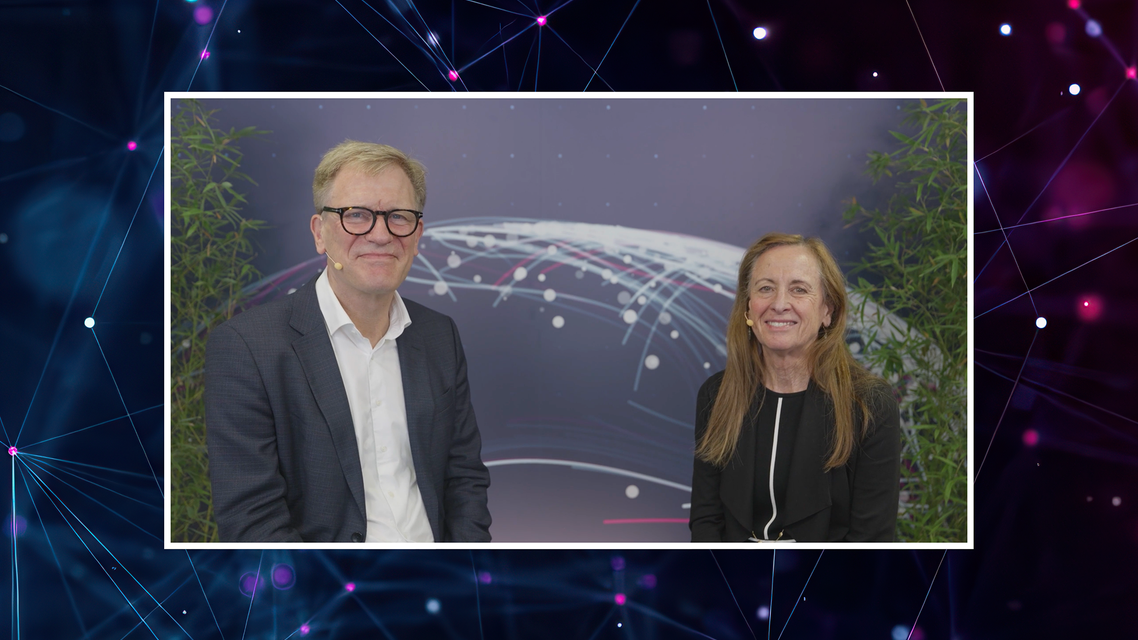
Hello, everyone. This is Continuing Education on the Global Learning Collaborative. I'm Katherine Tuttle, and joining me here today at EASD 2026 is Professor Peter Rossing.
Dr. Rossing:
Well, thanks for having me here.
Dr. Tuttle:
So, Professor Rossing, we've seen important new evidence here at EASD that adds to our understanding about nonsteroidal mineralocorticoid antagonists, especially finerenone.
So rather than simply reviewing the data, tell me what you think these data mean for practice, and how might we apply these learnings to the patient in front of us?
Dr. Rossing:
I think we have seen a lot of important data with clinical implications because I think we have seen data where people with type 1 diabetes can use finerenone, where people with type 2 diabetes can use finerenone.
And we have also seen data from the INFINITY analysis where people without diabetes can benefit from finerenone when they have CKD. And you can say that we have also seen that independent of different subgroups, we have seen in the large clinical trials that the nonsteroidal mineralocorticoid receptor antagonist, they provide benefit protecting kidney and heart.
But we also see from real-world evidence now at the meeting from different parts of the world that these data apply also in real-world life.
Dr. Tuttle:
So what does that mean for the endocrinologists, and what should they recognize as signs that a patient might have residual cardiovascular and kidney risks that could be addressed through adding finerenone?
Dr. Rossing:
Well, I think first of all, we need to learn the endocrinologists to measure kidney function and kidney damage, so eGFR and albuminuria should be measured regularly.
We need to screen, we need to look for kidney disease because when you have kidney disease with residual albuminuria despite being on RAAS blockade, then you need agents like the nonsteroidal mineralocorticoid receptor antagonist to reduce your risk, the risk for progression of kidney disease, and also the risk for cardiovascular disease.
So I think we need to tell the endocrinologist that they are important. They deal with these patients, particularly those with type 1 diabetes, but also those often most complicated with type 2 diabetes, but they often also have an important role to spread the message to the primary care physicians.
Dr. Tuttle:
Well, you chaired the KDIGO Diabetes and CKD Guideline Update 2026, which will publish imminently. And in that guideline, the level of evidence for finerenone was upgraded based on this building evidence base. Now the ADA and the EASD, I think, also recommend finerenone for people who have residual albuminuria after first-line therapies particularly with RAAS inhibition.
But do you think that message has really permeated beyond nephrology? And what do we need to do to make endocrinologists more aware of what the guidelines say and how to really move from the evidence to implementation at the point of care?
Dr. Rossing:
Yeah, that's always the challenge. We had the first trials in type 2 diabetes now more than 5 years ago, a reading out showing benefit, and still uptake of the nonsteroid mineralocorticoid receptor antagonist is not what we would like to see.
We can see from the many new drugs that we have to gain to protect kidney function that it takes time also in this situation. But it requires education, education, education to get this implementation, and we need to focus on learning people how to use the drugs, how to screen and then learn that it's actually quite simple.
And also, I think another message from the new guideline and also from the EASD ADA guideline is that I think we for many years only had 1 drug opportunity, blocking RAAS inhibition. Now we have many, and people are a little bit confused. Do I really need to combine? And yes, you need to combine. Combination is the future to protect the kidney and to protect the heart.
Dr. Tuttle:
Which is very important in people with CKD because, in fact, most of them will die of cardiovascular disease. So really, our responsibility is to reduce the totality of risks, which of course include preserving kidney function, preventing kidney failure, but also prolonging survival so people can be alive and well.
Dr. Rossing:
Yeah, that's an important point, and that's also stressed in the new guideline from EASD and ADA that we should focus on holistic care. It's not about the glucose. It's not about kidneys or hearts. It's about the whole person and all these complications, the cardio-kidney metabolic syndrome, as it was termed in the US, but I think that applies all over that we need to see holistic care.
Dr. Tuttle:
You know, one reason endocrinologists might be a bit reluctant are concerns about safety with finerenone.
But as one involved in the trials and the guidelines, but also a practicing endocrinologist, what advice can you give to the audience about how people should be monitored and managed to maintain safety, especially when we're giving them on top of, say, an ACE or an ARB, which might further increase their concern about hyperkalemia?
Dr. Rossing:
That's an important point because hyperkalemia is something everybody fears, although actually hypokalemia is also a problem, and that's reduced. Now we see in the trials a doubling of hyperkalemia, but only less than 2% have to stop because of hyperkalemia, so it can be managed in almost all people with diabetes or without diabetes having CKD.
You check potassium and sodium and GFR. And if you have values below 5.5, which to an endocrinologist is a lot, but actually in the trials we had levels up to 5.5 and people were fine, and they could stay on the dose of finerenone stably. So don't be concerned just because you are out of normal range.
That is normal when you treat with these drugs. Many were above 4.8 but in the range of 4.8 to 5.5 and did well and actually had improved prognosis. And we actually looked into those with the high values. They also do better when on finerenone compared to those not. So you should not be concerned about—or you can say you should monitor potassium because value’s above 5.5, then you should be handling it, but that's actually easy and was done either by short stopping the drugs, by adding diuretics in some by modification of diet, or by adding bicarbonate, but that's rarely used.
So usually diuretics or a short break in relation to intercurrent illness is all you need, and then you can restart.
Dr. Tuttle:
So pay attention to potassium, manage potassium, and push through and keep treating.
So the clinical trial evidence is part of the story. You've already talked about some real-world evidence. And discuss the FIRST 2.5 findings and maybe elaborate a little bit more on how you think they complement what we learn from clinical trials.
Dr. Rossing:
I think it's very important to have the real-world data, and you have yourself demonstrated that in your large CURE-CKD study that we can learn a lot from these data.
I think one learning that is important also from real-world life, except that you can expand the data from trials into real-world life, is that we are not always good enough at up-titrating patients in real-world life.
In a clinical trial where there is a protocol mandating up-titrating, we usually do that. But in real-world life, there is a tendency if you have GFR less than 60, you start on a low dose, then you are supposed to increase the dose to 20 if potassium allows. But that's often forgotten in real life, and that's something we can learn from these days, to pay extra attention to the up-titration.
Dr. Tuttle:
So one of the important things you said is that this shows us where the gaps in care are, and this is our opportunity to do quality improvement and fill those gaps and also the implementation gaps, and particularly to be able to focus on higher-risk patients to prioritize them for getting these highly efficacious and safe therapies to the people who are most likely to benefit.
Dr. Rossing:
We have talked a lot about type 2 diabetes and CKD, which is important because that's a very large population. But we should not forget, particularly not at a diabetes meeting, about type 1 diabetes.
So what have we learned about nonsteroidal mineralocorticoid receptor antagonist in this population?
Dr. Tuttle:
Thank you for that question, Peter, because like you, I will share with this audience, I'm actually an endocrinologist by training too, and then went on to do nephrology.
But my interest in diabetes and the kidneys started in type 1 diabetes, and it is a population that, like you, is near and dear to my heart. And so it really has been historic to finally, after 30 years, perform a clinical trial that delivered a new therapeutic in the form of finerenone for people with type 1 diabetes and CKD.
And I think we've forgotten that a lot of people with type 1 end up with kidney failure on dialysis and transplantation, which is a fate most people want to avoid. And that unmet need has really been unaddressed until recently. And that's why we both are investigators on FINE-ONE for full disclosure, but that we so enthusiastically joined in the trial.
What you and others were able to show is that in the large type 2 diabetes studies with finerenone and CKD, that the vast majority of the treatment effect, and I think it's 60% to 80%, in that range, could be attributable to reduction in albuminuria. And so they accepted that if we had a comparable reduction in albuminuria with finerenone versus placebo in type 1 diabetes with CKD, now that's a mouthful, that they would accept that that would be a bridging biomarker that would allow the drug to be considered proven hopefully efficacious as well as safe, and that turned out to be true.
So it was an albuminuria study. We saw—I believe it was about 26% reduction in albuminuria in a population with type 1 and CKD. And so that led to not only a successful trial completion, but now registration of finerenone as an approved therapy in our regions of the world to treat kidney disease in type 1.
So this is historic. Of course, you know, back to real-world evidence, I do think it'll be important to watch this population in real-world evidence, hoping that we can get some more signals for not just albuminuria, but preservation of function and lives.
Okay, so let's pivot for a moment. We've mostly talked about endocrinology practice and a little bit about nephrology, but vast numbers of people with diabetes receive treatment through primary care.
So what is the message to primary care professionals? What should they make sure to do to identify CKD, reduce cardiorenal risk? And I think the other thing we should add to that, because we ask primary care to do so much, is how can we as specialists also support them in that journey of delivering optimal CKD care to their patients with diabetes?
Dr. Rossing:
Yeah. Well, that's an important question because, as you say, the primary care physicians are those seeing almost 80% to 90% to 95% of those with diabetes.
And I think first thing is monitor kidney disease. It's easily done, eGFR, which is done by almost everybody regularly. But remember also to screen for albuminuria as a marker of kidney damage, because that indicates high risk for kidney, cardiovascular, and mortality risk, and therefore is a really, really important marker to add.
But it is not just a risk marker; it's also a call for action. You can do something about it; you can intervene. And we have now guidelines saying use RAAS blockade, use SGLT2 inhibition. And then if you have continuous elevation, add the nonsteroidal mineralocorticoid receptor antagonist or consider GLP-1 receptor agonists for kidney and cardiovascular protection.
And as you say, if you need help, call us. We have 24-hour phone service to help primary care physicians with guiding therapy on these topics. And we also have a national monitoring system where we are monitoring if guidelines are actually being followed so that we can reach out to people and say, "Well, maybe there's something you should look at or update.”
And therefore, specialists and primary care physicians need to be in close dialogue about the whole person, the whole care, and help each other.
Dr. Tuttle:
And I totally agree, even from a nephrology perspective. This does get complicated, especially when we start adding multiple drugs for CKD on top of, say, their glucose-lowering agents, blood pressure agents, lipid agents, and other conditions.
And so I think we need to acknowledge that the polypharmacy can be complex and also think about services like pharmacy-based medication management services, where pharmacists particularly can be helpful in terms of managing dosing, interactions, side effects, alongside clinicians, both specialists and primary care.
And I'm hopeful for that because when we become aware and we pay attention, things will start to change, even if we don't know exactly yet how.
So what would be your final take-home message to our audience?
Dr. Rossing:
Well, my final take-home message would be that we can do something about this, but we have to start by screening for CKD, then we have to act, and we have to collaborate. And I think these 3 take-home or take-to-work messages are important. And you can say that it's important to remember to screen for both kidney function, kidney damage, and then act with all the opportunities we have.
And when you are in doubt, reach out.
Dr. Tuttle:
And I totally agree with you. I couldn't say that any better.
But good kidney health means good overall health. And I think we can wrap up by saying with the new therapies that we have, including finerenone, but others like SGLT2 inhibitors, GLP-1 receptor agonists, and of course, our old friends, ACEs and ARBs, we now truly can aspire to saving kidneys, hearts, and lives.
That's all the time we have today. So thank you so much for listening, and thank you for joining me, Dr. Rossing, and sharing your valuable insights. Always a pleasure to speak with you.
Dr. Rossing:
It has been a pleasure. Thank you so much.
 This activity has been accredited by the European Board for Accreditation of Continuing Education for Health Professionals (EBAC®).


